24/7 Support
Our team is available around the clock to respond to any urgent transport situation.

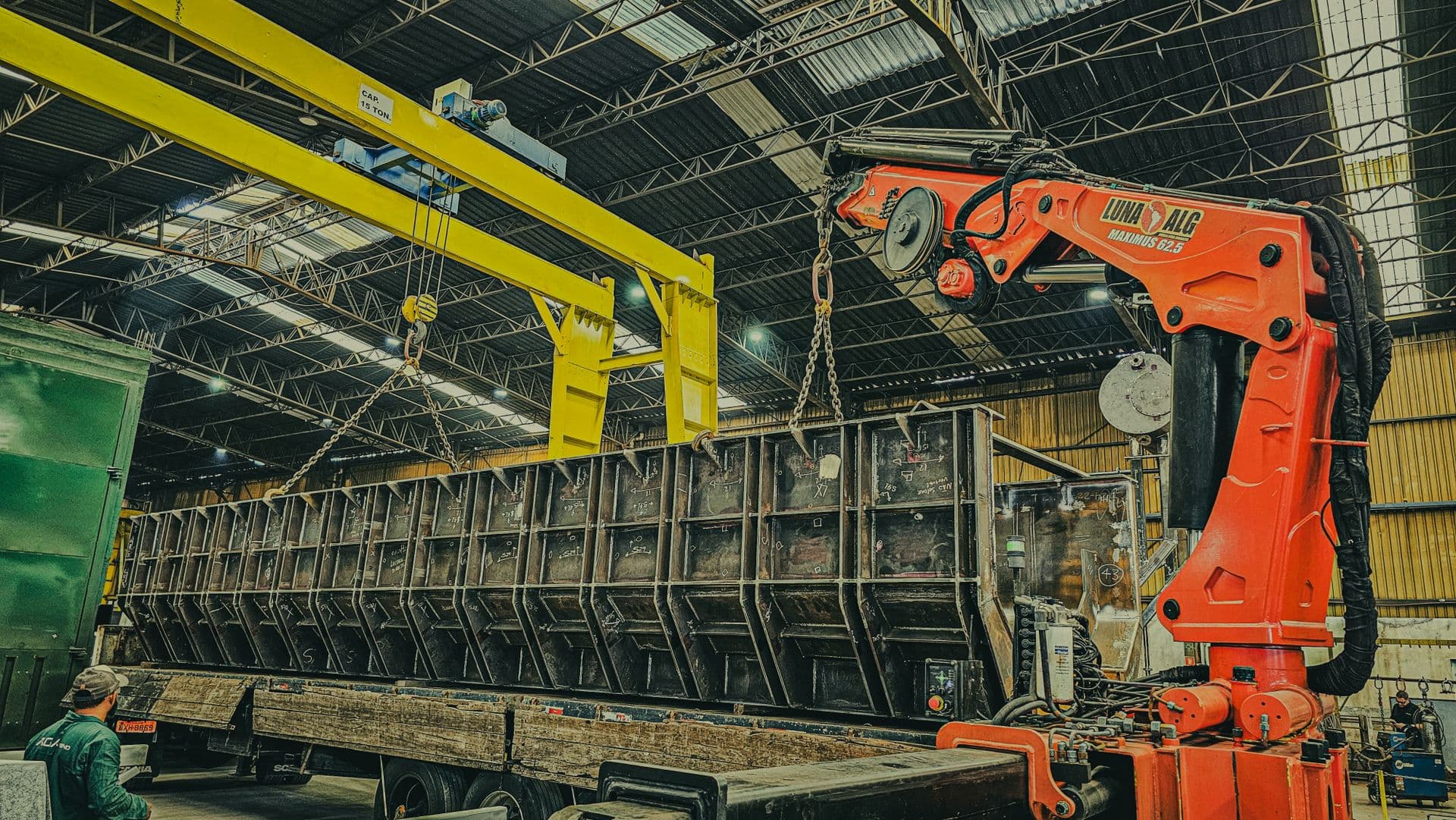
All nine ADR classes, with approved vehicles, certified drivers and a safety adviser — from classification through to delivery
Check your cargo's class
Choose a class to see what it covers and which goods fall under it.
ADR transport · Europe
Carrying dangerous goods leaves no room for improvisation. We work under a dangerous goods transport licence, with a safety adviser and a team trained continuously on ADR regulations.
Drivers hold current certificates and are re-examined regularly; vehicles carry a valid approval certificate and are checked before every run.
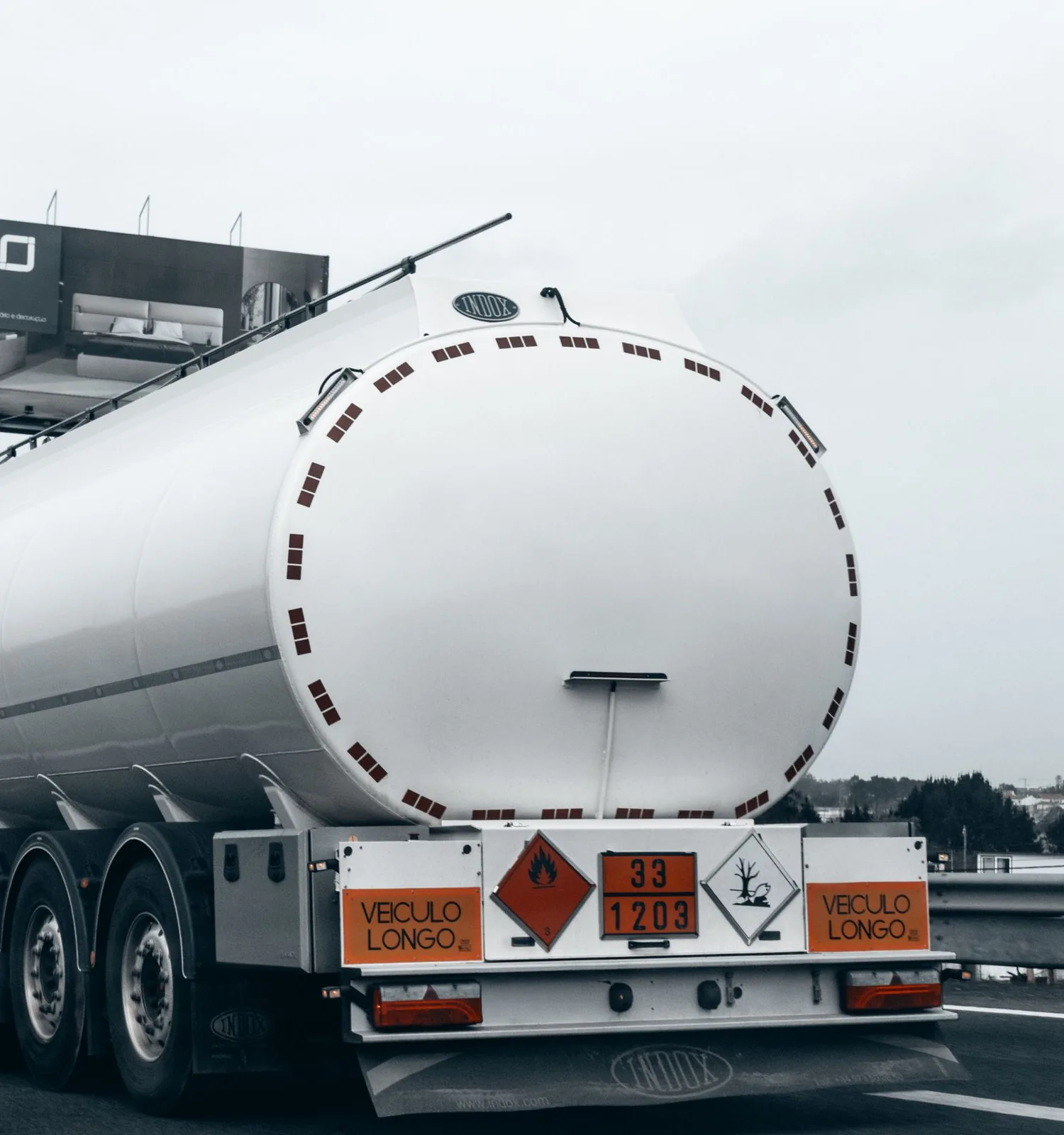
What we cover
The approvals, the people and the paperwork — all in place before loading.
The transport runs under a proper licence, not an exemption. Licence documents are available on request.
A specialist checks the classification, the packaging and the paperwork before the goods leave.
A current ADR certificate for the classes carried, with regular re-examination and training on regulatory changes.
Valid approval certificate, equipment matched to the class carried, and a technical check before the run.
We account for tunnel codes, weekend and holiday driving bans, and dedicated ADR parking.
Small quantities can travel in groupage; for large volumes or high-value goods, a dedicated truck gives more control.
How it works
Every stage is a checkpoint: if something is off, it stops before loading rather than on the road.
We establish the ADR class, the UN number and the packing group, from the safety data sheet.
We check that the packaging is approved for that group and that the labelling matches the class.
We assign a vehicle with a valid approval certificate and a driver certified for the class being carried.
We prepare the mandatory documents and plan the route around tunnel codes and driving restrictions.
The load travels with its placards and written instructions on board, and delivery is confirmed with signed documents.
ADR classes
We carry all nine classes. How the goods are classified determines the vehicle, the documents and the routes that may be used.

Class 1
dynamite, nitroglycerin, fireworks, ammunition
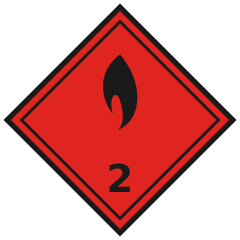
Class 2
flammable, non-flammable and toxic gases, pressurised cylinders, aerosols
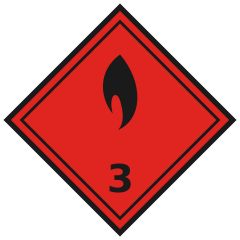
Class 3
fuels, solvents, paints, alcohols
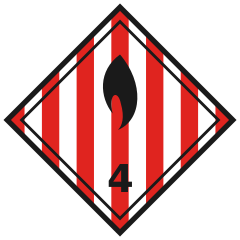
Class 4
self-igniting substances and substances that emit flammable gases on contact with water
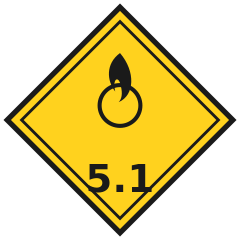
Class 5
nitrate-based fertilisers, peroxides, bleaching agents
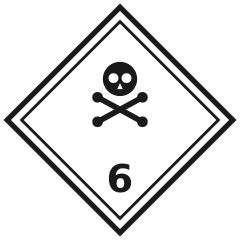
Class 6
pesticides, laboratory toxins, biological samples
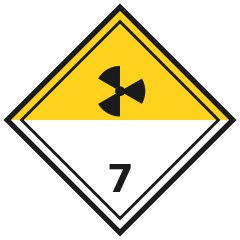
Class 7
medical isotopes, industrial radiation sources
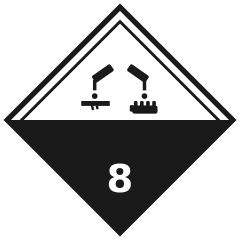
Class 8
acids, bases, battery electrolyte

Class 9
lithium batteries, asbestos, engines, environmentally hazardous substances
Vehicle options
The choice follows the physical state of the goods and the class they fall under.
The usual answer for palletised or boxed dangerous goods.
They keep the weather out and allow side loading, so handling is quicker.
A rigid structure, for goods sensitive to shock or impact.
The closed body adds a layer of mechanical protection on top of the packaging.
For liquids, gases and powders, equipped to the class being carried.
Each tanker holds its own approval certificate, listing the substances it may carry.
Packing and marking
Classification follows ADR — the European agreement on the international carriage of dangerous goods by road. Beyond the class, goods are also assigned a packing group, which states how severe the risk is.
Packaging has to withstand transport conditions and prevent any leak or damage; approved types pass rigorous testing before being admitted.
Packing groups
Group I
Risk levelHigh danger
The strictest requirements for packaging, marking and handling.
Group II
Risk levelMedium danger
Approved packaging, with intermediate strength requirements.
Group III
Risk levelLow danger
The most relaxed of the three, but still under the ADR regime.
| Group | Risk level | What it means |
|---|---|---|
| Group I | High danger | The strictest requirements for packaging, marking and handling. |
| Group II | Medium danger | Approved packaging, with intermediate strength requirements. |
| Group III | Low danger | The most relaxed of the three, but still under the ADR regime. |
Why us
We are more than a transport provider — we are your long-term logistics partner.
Our team is available around the clock to respond to any urgent transport situation.
We provide quotes and transport confirmations as quickly as possible, without bureaucracy.
All our shipments are fully insured, giving you peace of mind regardless of type or distance.
Transparent and competitive rates, without hidden costs or unpleasant surprises on the invoice.
From pickup to delivery, we manage all logistics for you with full responsibility.
FAQ
ADR is the European agreement governing the road carriage of dangerous goods: classification, packaging, labelling, vehicle equipment and documentation. More falls under it than people expect — fuels, gases, paints, acids, fertilisers, lithium batteries and aerosols.
We carry all nine ADR classes, from explosives through to miscellaneous dangerous substances. The class determines the vehicle, its equipment, the documents and the routes that may be used.
Several things add up: the vehicle needs an approval certificate, the driver an ADR certificate, the shipment a safety adviser, the routes are restricted — so sometimes longer — and the paperwork is specific. The gap depends on the class and the quantity.
The CMR consignment note with ADR entries, the driver's ADR certificate, the vehicle approval certificate, written instructions for the driver, and the packing conformity certificate. We prepare them, but the safety data sheet for the goods comes from you.
Yes. The regulation provides regimes for limited quantities (LQ) and excepted quantities, with their own labelling, which can be exempt from part of the full ADR requirements. We check whether your goods qualify before settling the transport regime.
Tunnels are categorised with codes (B, C, D, E) that bar certain classes; there are weekend and holiday driving bans, stops must be made in dedicated ADR parking, and above certain quantities an escort may be required.
Yes, for small quantities. The mixed-loading rules have to be respected — not every class may travel next to every other. We check compatibility before consolidating the load.
You can start from the calculator in the platform, then the team confirms the ADR regime from the safety data sheet. For cases that need review, we come back with a tailored offer in under 2 hours.
Our team will get back to you in under 2 hours with a personalized quote — no bureaucracy.