24/7 Support
Our team is available around the clock to respond to any urgent transport situation.

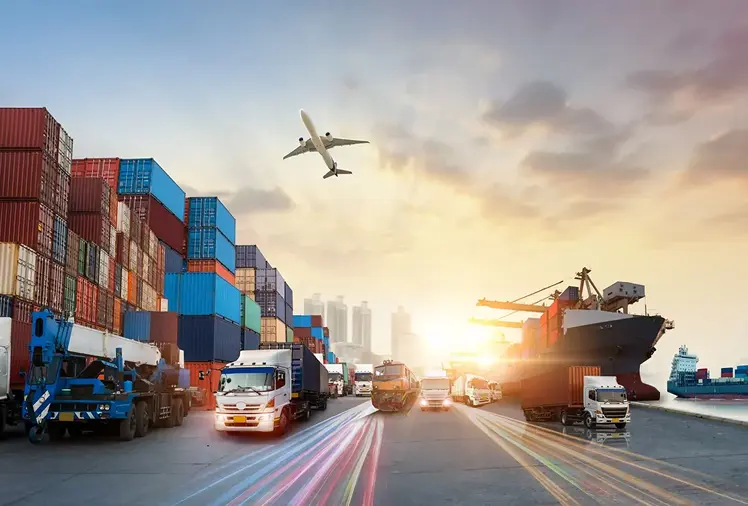
Road, rail, sea and air combined on one journey, with one operator responsible and one transport document
Which combination do you need?
What matters more
Pick the origin and destination countries to see the right combination of modes.
Multimodal transport · Europe and intercontinental
The cargo leaves the production site by truck for the port, is loaded into a sea container and crosses by sea, and on arrival reaches its final destination by rail. Three modes, one journey.
The cargo stays in the same loading unit throughout — a container or swap-body — and is not unloaded between modes. Less handling means fewer chances of damage.
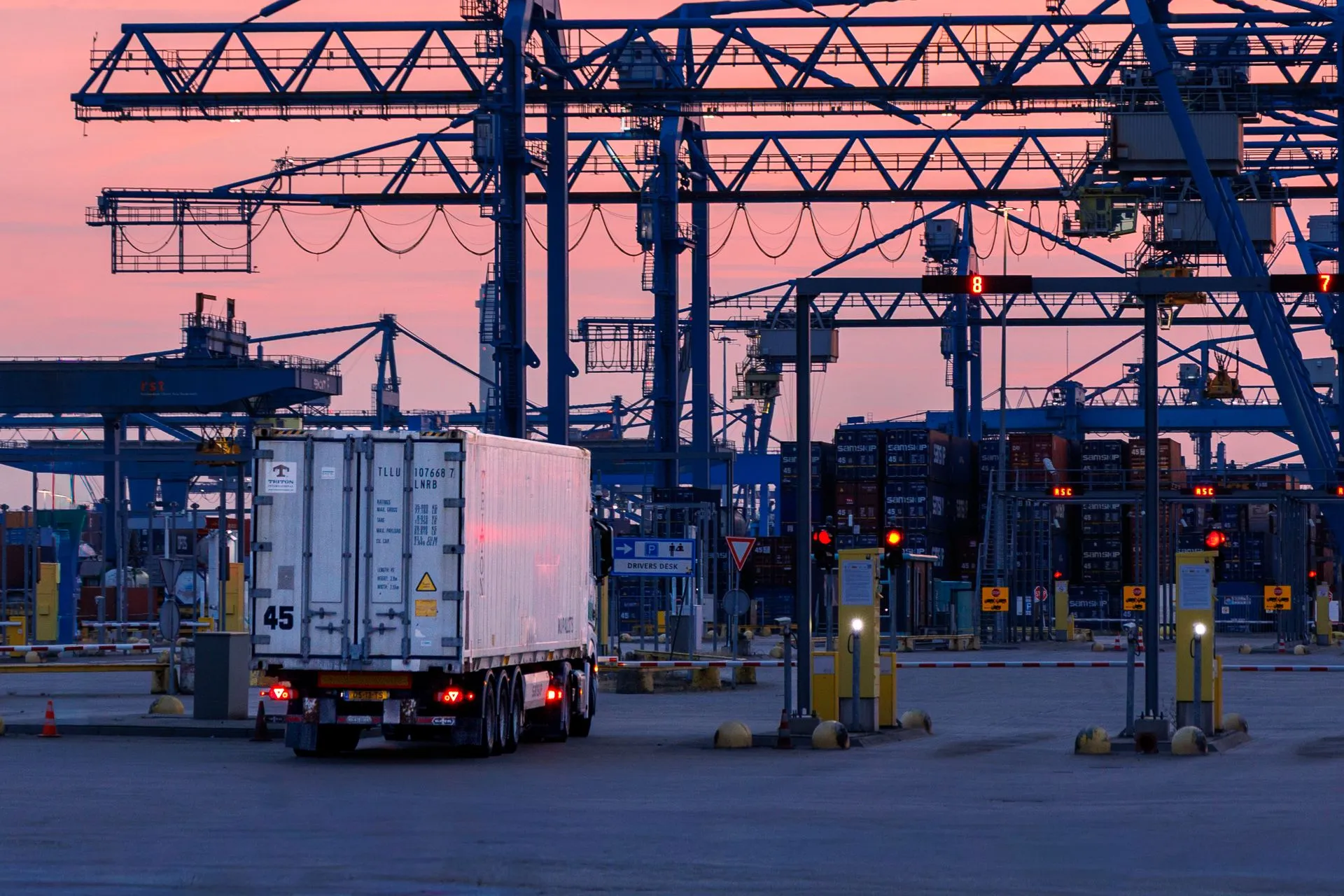
What we cover
The complexity stays with us; you have one point of contact.
One multimodal transport document, an FBL or equivalent, covers every leg and replaces the CMR note, the sea bill of lading and the air waybill.
One operator answers for the whole chain, even where legs are subcontracted. You do not have to work out which carrier, on which leg, is responsible.
Combining modes can cut cost by up to 30% against single-mode transport, particularly over long distances.
Moving the long legs to rail or sea cuts CO₂ emissions by 40 to 70%.
We can consolidate cargo from several sources before departure and unpack it at destination, on request.
We handle the customs documents and procedures along the route, and the single document simplifies the customs side too.
How it works
Every change of mode transfers the loading unit, it does not handle the cargo.
A truck picks the cargo up from the production site and takes it to the departure terminal or port.
The cargo goes into a container or swap-body, the unit is sealed and stays that way until destination.
Sea or rail, depending on the route. This is where the cost and emissions savings come from.
On arrival only the unit is transferred from one mode to the next. The cargo is not touched.
The last leg, road or rail, to the consignee's address, with the paperwork closed on the same FBL.
The modes
Which legs to use follows distance, deadline and cargo type — no single combination suits everything.
The connecting link in almost any chain: it takes the cargo from the address to the terminal, and from the terminal to the consignee.
The only mode that actually reaches door to door.
The cheapest over intercontinental distances and for large volumes.
It trades time for cost, so it takes the long legs of the journey.
Direct connections to the major international rail hubs and terminals, from standard containers through to open top.
It avoids road congestion and driving bans, with emissions far below a truck's.
For perishable, high-value or tightly scheduled cargo.
The most expensive per kilogram, so it is used on the leg where time genuinely matters.
Multimodal or intermodal
They are often used interchangeably, but they describe different things. The technical terminology looks at the cargo: intermodal means the goods stay in the same loading unit throughout and are not handled between modes.
The commercial framing looks at the contract: multimodal means a single contract and a single operator responsible for the whole journey, even where legs are subcontracted. What we offer is multimodal on both counts.
Comparison
Contract
Multimodala single one
one per leg
Liability
Multimodala single operator
each carrier for its own leg
Document
MultimodalFBL, one for everything
CMR, B/L, AWB, separately
Claims
Multimodala single point of contact
you first identify the carrier at fault
Loading unit
Multimodalstays intact
stays intact
| Criterion | Multimodal | Intermodal |
|---|---|---|
| Contract | a single one | one per leg |
| Liability | a single operator | each carrier for its own leg |
| Document | FBL, one for everything | CMR, B/L, AWB, separately |
| Claims | a single point of contact | you first identify the carrier at fault |
| Loading unit | stays intact | stays intact |
Single modes
Each mode has its own page, with the details that only matter there.
Why us
We are more than a transport provider — we are your long-term logistics partner.
Our team is available around the clock to respond to any urgent transport situation.
We provide quotes and transport confirmations as quickly as possible, without bureaucracy.
All our shipments are fully insured, giving you peace of mind regardless of type or distance.
Transparent and competitive rates, without hidden costs or unpleasant surprises on the invoice.
From pickup to delivery, we manage all logistics for you with full responsibility.
FAQ
It uses at least two different modes — road, rail, sea, air — under a single contract with one carrier responsible. The cargo stays in the same loading unit, a container or swap-body, throughout, without being unloaded between modes.
Intermodal means several carriers, with separate contracts for each leg. Multimodal means one contract and one carrier responsible for the whole journey, even where the modes are subcontracted. For the customer, multimodal drastically simplifies administration, liability and paperwork.
Over long distances where combining modes cuts cost, for instance China to Europe by sea and rail. In areas with no direct road access, such as islands or mountain regions. When you want to reduce your carbon footprint. And when you want to avoid traffic congestion and the driving bans some countries impose.
Cost falls by up to 30% against single-mode transport, and CO₂ emissions by 40 to 70% when the long legs move to rail or sea. Delivery is also more predictable, because the routes are planned in advance.
One operator, for the whole chain, under a single document. Even where legs are subcontracted, you have one point of contact and a simple claims procedure, without having to work out which carrier on which leg is responsible.
We issue one multimodal transport document — an FBL, FIATA Bill of Lading, or equivalent — covering every leg. It replaces the individual documents, the CMR note, the sea bill of lading and the air waybill, and simplifies both customs and claims.
No. Only the loading unit is transferred from one mode to the next. The cargo stays sealed inside from loading through to destination, so it passes through fewer handling steps than a transhipped shipment.
Tell us the origin, the destination and the type of cargo, and we propose the right combination of modes. For cases that need review, the team comes back with a tailored offer in under 2 hours.
Our team will get back to you in under 2 hours with a personalized quote — no bureaucracy.