24/7 Support
Our team is available around the clock to respond to any urgent transport situation.

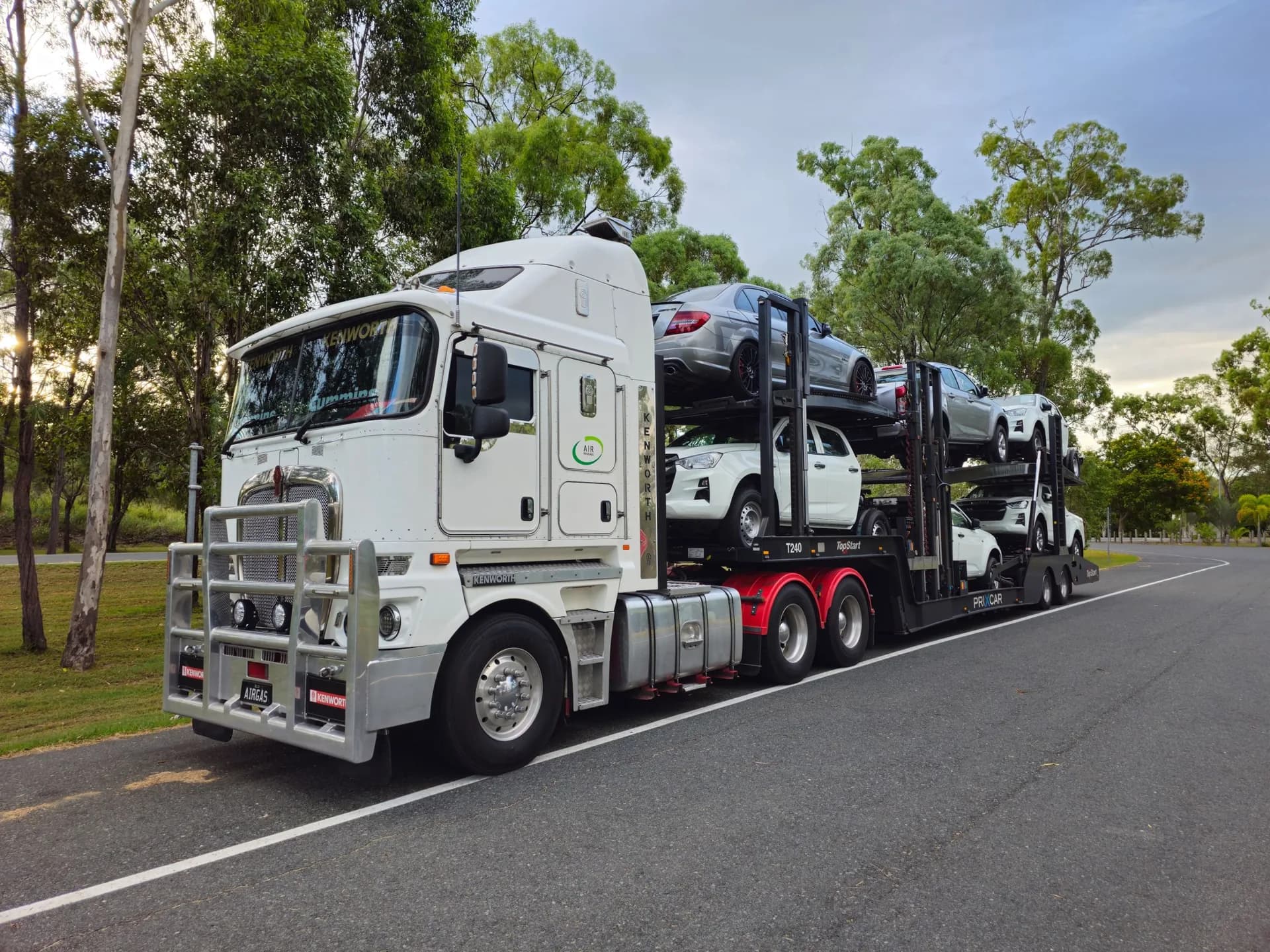
On open or enclosed carriers, strapped by the wheels, with the vehicle's condition recorded in writing and photos at both ends
Car transport · Romania and Europe
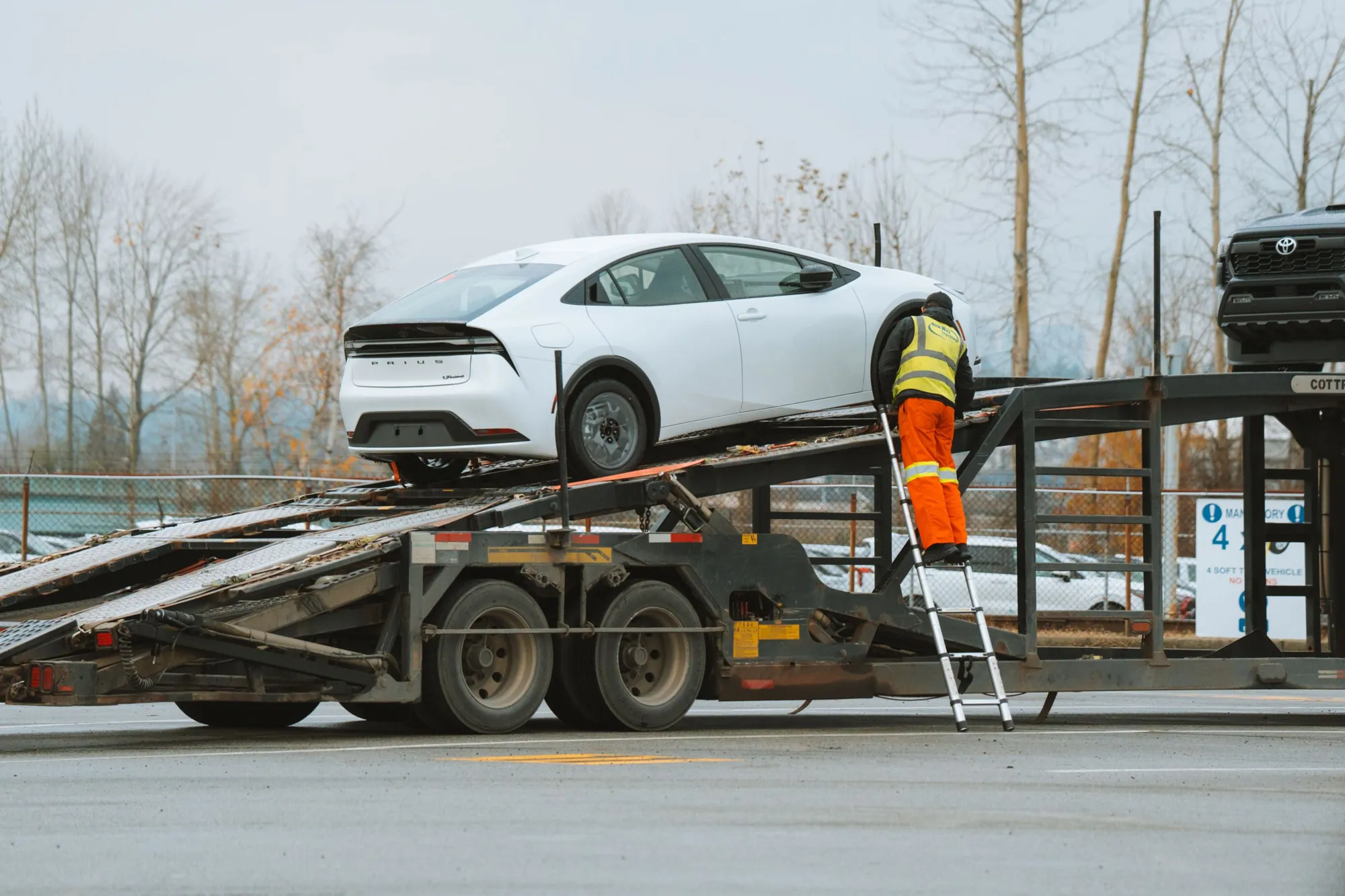
Car transport is done on a carrier, not by towing: the vehicle is strapped down by its wheels, so the suspension and the body take no strain. That is how cars without a valid inspection, without insurance or that no longer start can still be moved.
As a freight forwarder, we coordinate domestic and international car transport through vetted partner carriers, with the vehicle's condition recorded in writing and photos at both ends, and CMR cover for the whole journey.
What we cover
From the documents required to handing over the vehicle at destination.
Registration document or vehicle identity card, a written authorisation if the sender is not the owner, and the invoice for new or imported vehicles.
Open or enclosed, dedicated or shared — decided by the value of the vehicle, the budget and the delivery deadline.
Loaded with a winch. Tell us upfront if the steering is locked, whether the brakes hold and if any wheels are missing, so we send the right equipment.
Leave no more than a quarter of a tank. It matters for the total weight of the carrier and for safety during transport.
As a rule they do not travel in the car: they are not covered by the cargo insurance and they change the declared weight. Exceptions are agreed in writing before loading.
Any difference from the loading photos is written into the CMR on delivery and the claim is opened there and then, not afterwards.
Three things that separate a good car shipment from a conversation about damage.
How we work
Four stages, the same for one vehicle or a whole batch.
Make, model, dimensions, whether it starts and whether it is lowered or modified.
We choose the right option and agree the collection date and both addresses.
The vehicle is loaded, strapped by the wheels and photographed from every angle.
At destination the condition is compared with the loading photos and receipt is signed.
Every type of vehicle has its own way onto the ramp and its own lashing.
Carriers for vehicle transport
The price difference comes from how many cars move at once and how protected the vehicle is on the way.
The most common option. Quick collection and good access inside towns.
For batches and fleets. Lower cost per vehicle, but a fixed loading schedule.
The vehicle travels under cover, protected from the weather and from gravel.
For cars that do not start, do not brake or cannot be steered.
For sports cars with low ground clearance and a shallow approach angle.
Short distances and access where a full transporter cannot go.
How we pick the carrier
Three things decide the carrier: how the vehicle gets up the ramp, how exposed it may be on the road, and how many cars leave at once. A standard car goes on an open carrier without discussion, but a low car needs long ramps so it does not scrape on the way up.
The rest is arithmetic: a dedicated shipment leaves when you want it and costs more, while a shared transporter costs less but follows the truck's own schedule.
A guide, by vehicle type
Standard car
CarrierOpen carrier
Best balance of price and time.
Luxury or classic car
CarrierEnclosed carrier
Protection from weather and gravel.
Low sports car
CarrierLow carrier
Shallow ramp angle, no scraping.
Vehicle that does not start
CarrierWinch carrier
It cannot drive up the ramp.
Dealer batch or fleet
Carrier8–9 position transporter
Lower cost per vehicle.
Motorcycle
CarrierCarrier with lashing points
Secured by wheel and frame.
| Vehicle | Carrier | What decides it |
|---|---|---|
| Standard car | Open carrier | Best balance of price and time. |
| Luxury or classic car | Enclosed carrier | Protection from weather and gravel. |
| Low sports car | Low carrier | Shallow ramp angle, no scraping. |
| Vehicle that does not start | Winch carrier | It cannot drive up the ramp. |
| Dealer batch or fleet | 8–9 position transporter | Lower cost per vehicle. |
| Motorcycle | Carrier with lashing points | Secured by wheel and frame. |
Related services
Machinery, packaged goods and urgent shipments need different equipment.
Why us
We are more than a transport provider — we are your long-term logistics partner.
Our team is available around the clock to respond to any urgent transport situation.
We provide quotes and transport confirmations as quickly as possible, without bureaucracy.
All our shipments are fully insured, giving you peace of mind regardless of type or distance.
Transparent and competitive rates, without hidden costs or unpleasant surprises on the invoice.
From pickup to delivery, we manage all logistics for you with full responsibility.
Frequently asked questions
What matters before the car goes up the ramp.
Domestically, usually one to three days from collection. Across Europe, two to seven days depending on distance and route. A dedicated shipment leaves on the date agreed with you; a shared one on a multi-car transporter follows the truck's schedule, so it takes longer but costs less.
Yes, it is winched on board. Tell us upfront whether the steering is locked, whether the brakes hold and whether all wheels are on, because that decides which carrier we send. A car that cannot be steered needs extra equipment at loading.
The registration document or vehicle identity card, and ID for the person handing the car over. If the sender is not the owner, we ask for a written authorisation. For new or imported vehicles, the purchase invoice. The car does not need a valid inspection or insurance: on a carrier it does not drive on its own wheels.
As a rule, no. Items inside are not covered by the cargo insurance, they change the declared weight of the shipment and they can be damaged by vibration. If you need an exception, we agree it in writing before loading, with a list of the items.
On an open carrier the vehicle is exposed to the weather and to gravel off the road surface, exactly as in traffic. An enclosed carrier shields it completely and is the usual choice for luxury, classic and competition cars. It costs more and there are fewer of them, so book early.
At loading we produce a condition report with photos from every angle, and at delivery the vehicle is compared against them. Any difference is written into the CMR when receipt is signed and the claim is opened immediately. Complaints raised after the transporter has left are hard to support, precisely because that check is missing.
Our team will get back to you in under 2 hours with a personalized quote — no bureaucracy.